The Role of Advanced Engineering in Modern Trailer Manufacturing
Gone are the days when a trailer was simply a steel box welded onto an axle. Today, the demands of modern logistics—higher speeds, heavier loads, tighter delivery windows, and stringent safety regulations—require a sophisticated approach to design and manufacturing. At Bharat Trailer Solution, advanced engineering is at the heart of everything we do. It is the reason our trailers deliver superior strength, durability, and reliable performance, even under the most challenging conditions.
1. Computer-Aided Design (CAD) and Finite Element Analysis (FEA)
Before the first piece of steel is cut, our trailers are born in a digital environment. We use advanced CAD software to create precise 3D models of every component. More importantly, we utilize Finite Element Analysis (FEA) to simulate real-world stresses on the trailer. This allows our engineers to:
Identify stress concentration points that could lead to cracking.
Optimize the chassis design to reduce weight while maintaining structural integrity.
Predict fatigue life under various load scenarios.
This digital prototyping ensures that the final product is not only strong but also optimized for longevity.
2. High-Tensile Steel and Material Science
The choice of material is critical. While traditional trailers used mild steel, modern engineering favors high-tensile steel. These advanced alloys offer greater strength with lower weight. This is a game-changer for logistics:
Lighter Trailer: Allows for higher payload capacity within legal weight limits.
Higher Strength: Resists bending and deformation under heavy loads.
Better Fatigue Resistance: Lasts longer under cyclic loading (constant loading and unloading).
At Bharat Trailer Solution, we leverage the latest in material science to ensure our trailers offer the perfect balance of strength and weight efficiency.
3. Precision Fabrication and Welding
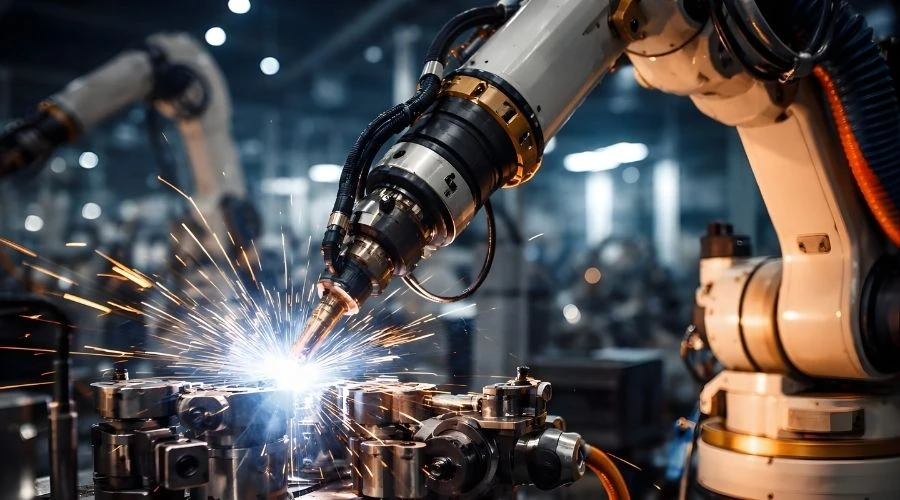
A design is only as good as its execution. Modern trailer manufacturing relies on precision fabrication techniques. We utilize jig-based assembly systems to ensure that every trailer frame is perfectly square and aligned. Improper alignment leads to uneven tire wear, poor handling, and premature component failure.
Our welding processes are strictly controlled. We employ certified welders who understand the techniques required to join high-tensile steel without introducing weaknesses. Every weld is inspected to meet our strict quality control standards.
4. Advanced Suspension and Braking Systems
The suspension and braking systems are critical for safety and cargo protection. Advanced engineering has led to the development of:
Mechanical Suspension: Robust and easy to maintain, ideal for heavy loads on rough terrain.
Air Suspension: Offers superior ride quality, reducing shock to fragile cargo and improving tire life. It also allows for easy height adjustment for docking.
Anti-Lock Braking Systems (ABS): Modern trailers can be equipped with ABS to prevent wheel lockup during emergency braking, significantly improving safety on wet or slippery roads.
We integrate these advanced systems to ensure our trailers provide a smooth, safe ride regardless of the load or road condition.
5. Strict Quality Control and Testing
Engineering excellence is validated through rigorous testing. Our commitment to strict quality control means that every trailer undergoes a comprehensive inspection process. We conduct:
Dimensional Checks: To ensure all components meet design specifications.
Non-Destructive Testing (NDT): To inspect critical welds for hidden defects.
Load Testing: To verify structural integrity under maximum load conditions.